Broadband explained: a simple guide to internet jargon
 • 19 Mar 2026
Tech terms, demystified.
The world of broadband can be, at times, a little confusing.
Providers throw around technical terms and acronyms, like Mbps and FTTP, while many people still aren’t exactly sure what they’re talking about.
That’s where this guide comes in. Here we’ll explain, in simple terms, the most common bits of jargon you might find while searching for a broadband deal, so you can understand what you’re paying for and choose the right package for your home.
Broadband speed (Mbps and Gbps)
This is perhaps the most important factor when looking at broadband deals, aside from price. Put simply, broadband speed refers to how quickly data moves between the internet and your devices.
It’s usually measured in Mbps (megabits per second) or Gbps (gigabits per second), and you’ll generally pay more for faster speeds.
What is Mbps?
Mbps stands for megabits per second. It’s a measure of how fast your internet connection can download or upload data - the higher the number, the faster your broadband.
What is Gbps?
Gbps stands for gigabits per second. 1 Gbps equals 1,000 Mbps, and these superfast speeds are usually only available with full fibre broadband.
A note on average speed
You’ll see this phrase a lot when looking at broadband deals. The reason is simple - because broadband performance can vary, depending on several factors, providers advertise the average available speed, rather than the maximum.
This is the speed, measured during peak times, that at least 50% of customers can expect to experience. Your actual speed may be higher or lower depending on your location and connection type.
What speed do you need?
Here’s a rough guide to the kinds of speeds you should be looking at, depending on your household’s usage.
| Usage | Recommended Speed |
| Email & Basic Browsing | 10-25 Mbps |
| Streaming HD | 25-50 Mbps |
| Online Gaming | 50-100 Mbps |
| Working From Home | 50-150 Mbps |
| Large Households | 100+ Mbps |
Download speed vs upload speed
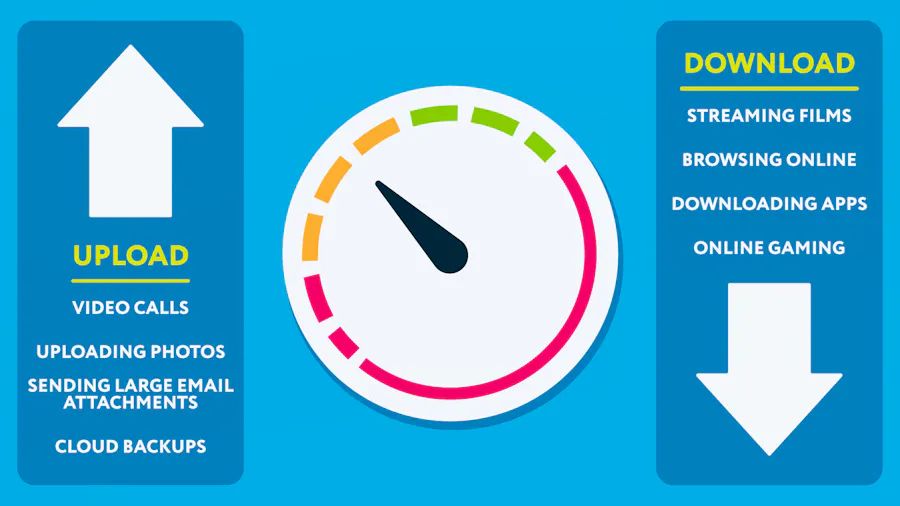
Yes, there is a difference! More often than not you’ll only see download speeds when looking at broadband deals, but upload speeds are also very important.
Download speed
Your broadband’s download speed measures how quickly your devices receive data from the internet. It’s the Mbps or Gbps value that you’ll likely see on broadband deals.
Activities that rely on download speed include:
- Streaming films or TV
- Browsing websites
- Downloading apps or files
- Online gaming
Upload speed
Upload speed goes the other way - it measures how quickly you can send data to the internet.
It’s crucial for activities like:
- Video calls (Zoom, Teams, etc.)
- Uploading photos or videos
- Sending large email attachments
- Cloud backups
Providers will usually let you know the upload speed they’re offering, although you might need to dig a little to find it. Generally speaking, full fibre broadband offers much faster upload speeds than standard fibre connections, and some providers even offer the same speeds for both uploads and downloads (symmetrical speeds).
Broadband types
There are several different types of broadband available in the UK. Here’s a quick breakdown of the most common:
ADSL
ADSL stands for Asymmetric Digital Subscriber Line, but it’s probably easier to think of it as a ‘traditional’ internet connection. It uses copper phone lines to transfer data directly to your home.
Speeds are generally much lower using an ADSL connection, and reliability can be spotty, depending on your area and your distance from the exchange.
Typical speeds: Up to 24 Mbps
FTTC
FTTC stands for Fibre to the Cabinet. Using an FTTC connection, data is transferred via fibre optic cables to a street cabinet, and from there to your home via traditional copper cables.
It’s a bit of a mix of traditional ADSL and modern fibre connections, offering more stability and faster speeds than a traditional connection, but without the need for a full fibre infrastructure. It’s widely available and often a little cheaper than a full fibre connection, too.
Typical speeds: Up to 80 Mbps
FTTP (or Full Fibre)
FTTP stands for Fibre to the Premises, and is also commonly referred to as ‘full fibre’. Using an FTTP connection, data is transferred via fibre optic cables directly to your home.
It’s the fastest, most stable internet connection currently on the market, but while rollouts continue at pace, it’s still not available everywhere in the country. You will also need to have a dedicated fibre port installed in your home to take advantage of this type of connection.
Check out our comprehensive guide to FTTP for more information.
Typical speeds: 100 Mbps to 1 Gbps or more
Mobile broadband
Mobile broadband is exactly what it sounds like - an internet connection delivered via 4G or 5G mobile signals. You can still get some decent, fibre-level speeds and there’s no reliance on any kind of cable infrastructure, making it perfect for those renting or in areas where fibre isn’t available.
It does, however, rely on good 4G or 5G signal, which might not be useful for some - especially those living in rural areas.
Typical speeds: Up to 40 Mbps (4G) or up to 210 Mbps (5G)
Data Usage and Unlimited Broadband
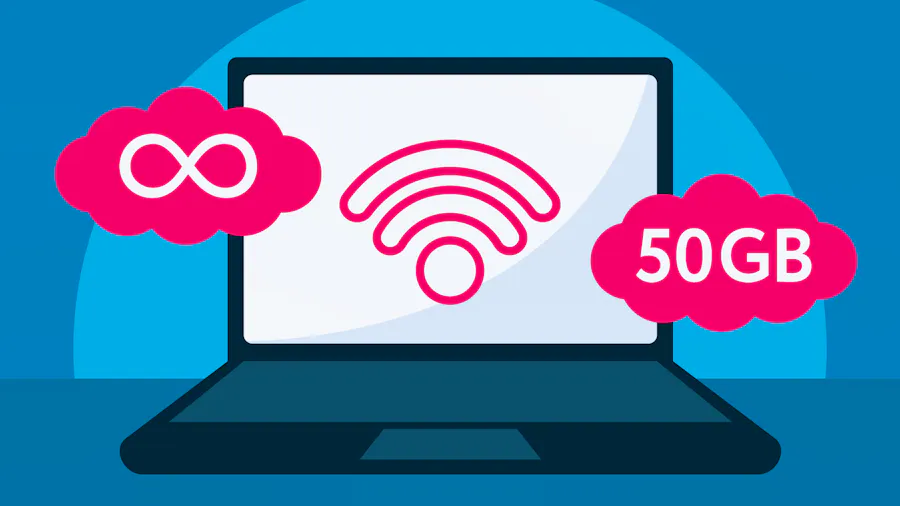
A good deal of broadband packages nowadays offer unlimited usage, but some still have data limits - so it’s always worth double checking that a package meets your needs before you sign a contract.
Unlimited broadband is exactly what it sounds like. Your provider has set no monthly limit, allowing you to browse, stream and download as much as you like without worrying about your usage.
A data cap, on the other hand, limits how much internet data you can use each month. If you exceed your allowance, your provider may charge extra fees, reduce your download speed or even temporarily restrict your connection (also known as throttling).
Router
A router is the device that connects your home to the internet. You can plug directly into a router using a LAN (local area network) cable, but most modern routers will also create a WiFi network, which allows your devices to connect wirelessly from anywhere in your home.
Most broadband providers will supply a router at no extra cost when you sign up for a contract.
Broadband glossary
Finally, here are some additional terms that you might come across while researching broadband providers.
- Bandwidth - The maximum amount of data that can be transmitted over a connection.
- Latency - Also known as ping, a measurement of how long it takes for data to travel from your device to a server and back. Low latency is especially important for online gaming and video calls.
- Modem - A device that connects your home network to your internet provider’s network. Your router may contain a modem.
- Mesh Wi-Fi - A system that uses multiple routers or nodes to improve Wi-Fi coverage across larger homes.
- ISP (Internet Service Provider) - The company that provides your broadband connection.
Find a Deal
Enter your postcode to see the latest offers in your area.
Don't miss our latest deals
Sign up to receive unmissable offers and the latest news on TV, broadband, energy, phones and more.








Latest News



Broadband Speed Test
Find out whether you could be getting faster home broadband speeds. Our speed test will check your current broadband and let you compare with other speeds in your area.
Test your broadbandBroadband Usage Calculator
Answer a few quick questions and our broadband usage calculator will give you a data estimate for your household. Using this we'll recommend the best kind of deal for you.
Calculate